

Beyond The Streets Paris Exhibition: When Graffiti and Street Art Become Part of Art History
- Delphine & Romain Class
- Jun 3
- 7 min read

For many years, graffiti was viewed as a marginal practice, often associated with transgression, the illegal occupation of public space, and underground culture. Yet over the decades, this form of expression born on the streets has evolved into one of the most influential artistic movements of the late twentieth and early twenty-first centuries. With the arrival of Beyond The Streets in Paris, the French capital is hosting a major international exhibition that retraces this extraordinary cultural journey and celebrates the impact of street art on contemporary society.
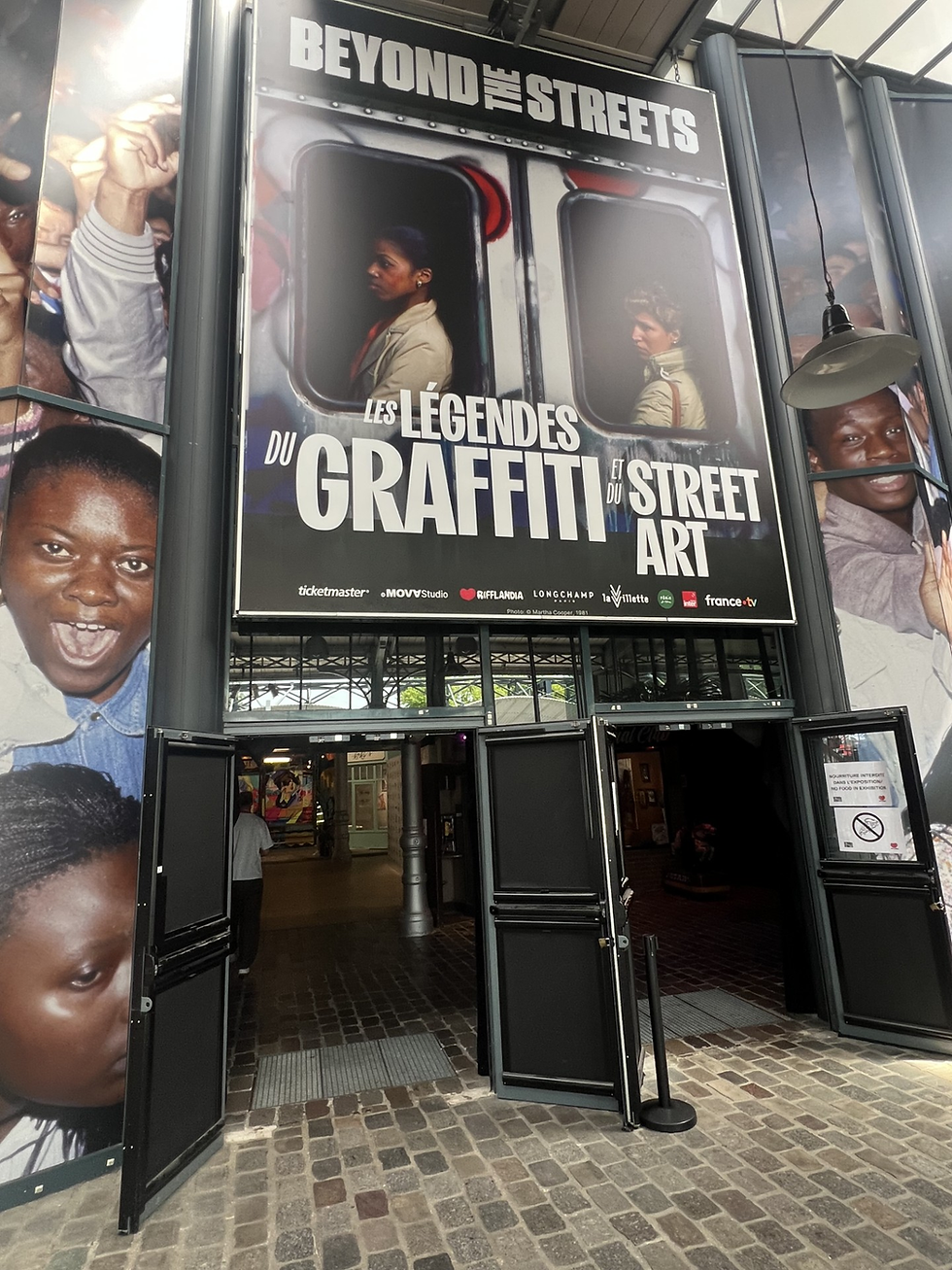
Located at La Grande Halle de la Villette, the exhibition spans nearly 3,600 square meters and brings together more than one hundred artists from around the world. Far more than a simple retrospective, Beyond The Streets offers an immersive experience in a universe where art, music, fashion, design, and urban cultures converge to tell a common story: that of a movement born in the streets that has become a global cultural phenomenon.
An Exhibition Born from a Global Vision
Created by Roger Gastman, a renowned graffiti historian and curator, Beyond The Streets has already captivated audiences in several major international cities before arriving in Paris. Los Angeles, New York, London, and Shanghai have all hosted this landmark exhibition, which has established itself as one of the most significant events dedicated to graffiti and street art.
Gastman’s objective is clear: to tell the story of graffiti and urban art through the people who shaped it. Unlike certain institutional approaches that examine the phenomenon from the outside, Beyond The Streets maintains a close connection to the artists and their communities. The exhibition seeks to preserve the authenticity of a movement that developed far from museums before permanently transforming the global artistic landscape.
From New York to Paris: The Story of a Visual Revolution
The exhibition traces the origins of modern graffiti back to the streets of New York in the late 1960s and early 1970s. Pioneers such as Cornbread and TAKI 183 helped create a new form of urban expression centered on signatures, visibility, and the appropriation of public space. Gradually, New York’s subway system became the canvas for an explosion of creativity that extended far beyond simply writing names or pseudonyms.
Through historical photographs, rare archives, and iconic artworks, Beyond The Streets demonstrates how this practice spread across the globe. The exhibition also highlights the essential role of photographers such as Martha Cooper, whose images documented the emergence of graffiti and helped this culture transcend American borders.

Yet the exhibition goes beyond a purely historical perspective. It also shows how street art has evolved over the decades to explore new aesthetic territories. Monumental murals, immersive installations, urban interventions, and digital artworks all testify to the movement’s remarkable capacity for reinvention.
A Constellation of Major Artists
One of Beyond The Streets’ greatest strengths lies in the extraordinary diversity of artists on display. The exhibition brings together several generations of creators who have shaped the history of graffiti and urban art.
Visitors can discover the legacy of legendary figures such as Keith Haring, Banksy, Lady Pink, and FUTURA 2000, alongside contemporary artists who continue to push the boundaries of urban creativity. Names such as JR, Invader, Shepard Fairey, JonOne, and André Saraiva illustrate the richness of an artistic scene that has become truly global.
This diversity reveals that street art is not a single style but rather a broad spectrum of artistic practices. Some works emphasize political messages, others focus on graphic experimentation or humor. All, however, contribute to a shared reflection on urban space and visibility in contemporary society.
Shepard Fairey: An Exceptional Presence and an Unprecedented Museum Presentation
Among the highlights of the Paris edition is the prominent place given to Shepard Fairey, one of the most influential figures in contemporary urban art. Internationally recognized for his Obey Giant project and for the iconic “Hope” poster created during Barack Obama’s presidential campaign, Fairey is featured in an especially ambitious presentation within Beyond The Streets Paris.
Around fifty original works are brought together, offering a remarkable overview of his artistic career, from graphic compositions inspired by political propaganda to socially engaged works addressing environmental, social, and humanitarian issues. More than simply lending artworks, Shepard Fairey personally traveled to Paris to oversee the installation of his section, ensuring a coherent dialogue between the various pieces on display.
His presence reflects the importance he attributes to this exhibition, considered one of the largest celebrations of urban culture ever organized in Europe.

Invader Continues His Dialogue with Paris
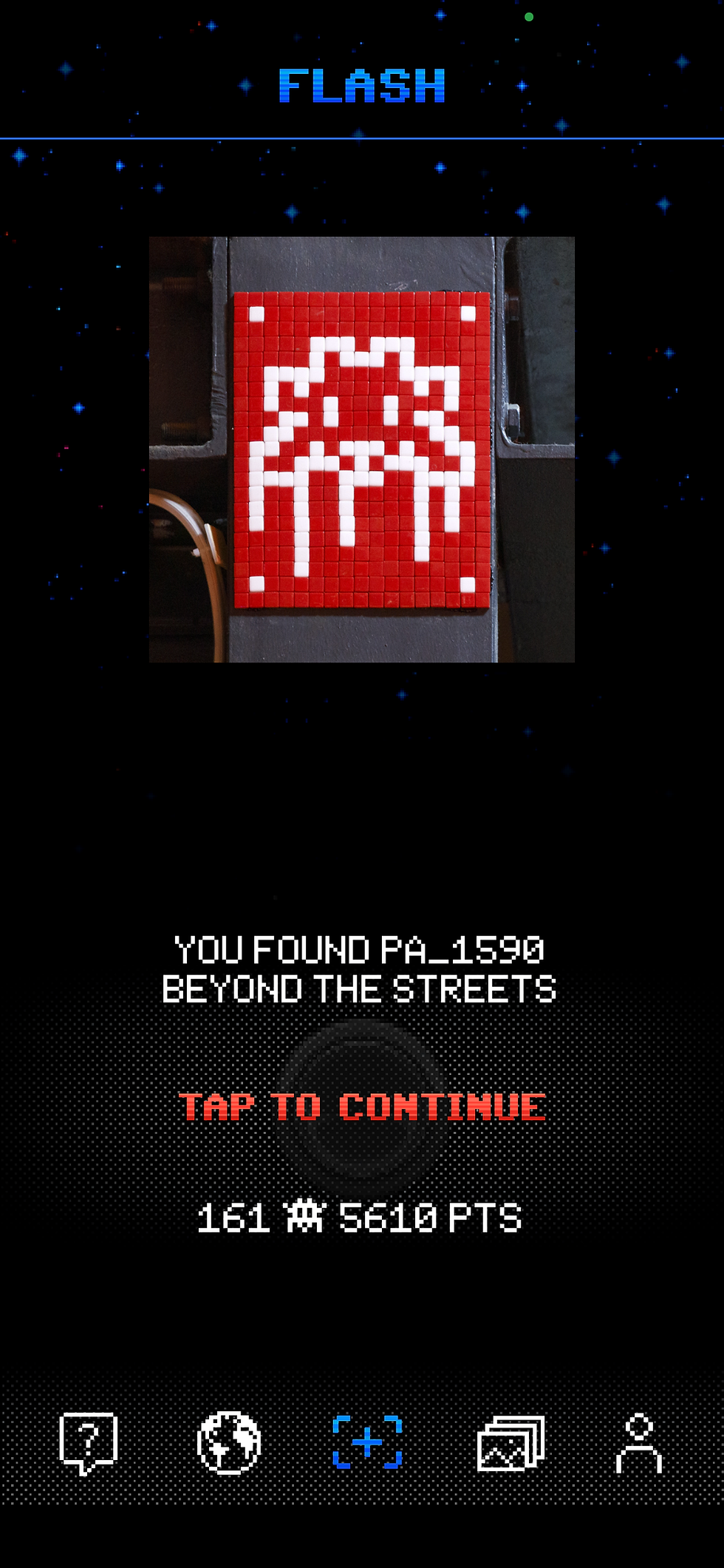
The exhibition also shines a spotlight on Invader, whose work has become inseparable from the Parisian landscape. Faithful to his practice of “invading” cities worldwide with mosaics inspired by early video games, the artist took advantage of the event to continue his intervention in the La Villette district.
His invasion of the park has been enriched with new installations, further strengthening the connection between urban space and the exhibition itself. Within the exhibition, visitors can discover a mosaic specially integrated into the scenography: PA_1590 (worth 30 points on the FlashInvaders app).
This presence underscores the extent to which Invader has helped bring street art into the collective imagination, transforming the search for his mosaics into a genuine international cultural phenomenon.
FUTURA 2000: A Graffiti Legend at the Opening
The opening of Beyond The Streets Paris was also marked by the presence of FUTURA 2000, one of the most important figures in New York graffiti history. Widely regarded as one of the first artists to introduce abstraction into the world of graffiti, FUTURA 2000 occupies a central place in the movement’s history.
His appearance in Paris was particularly appreciated by enthusiasts and collectors, who had the opportunity to meet one of the key figures behind the emergence of modern urban art. The exhibition features several original works illustrating the evolution of his unique visual language, characterized by dynamic compositions, color splashes, and abstract forms that have profoundly influenced generations of artists.
His presence highlights the direct connection that Beyond The Streets maintains with the pioneers who have shaped graffiti culture since the 1970s.
Paris at the Heart of the Story
The Paris edition of Beyond The Streets possesses a distinctive dimension. While maintaining its international scope, the exhibition also places significant emphasis on the French urban art scene.
For several decades, Paris has maintained a unique relationship with graffiti. Beginning in the 1980s, the city became one of Europe’s leading laboratories for the movement, particularly through the rise of hip-hop culture and the emergence of artists who would quickly become influential figures.
Beyond The Streets pays tribute to this history by showcasing several French artists and emphasizing the lasting influence of Parisian urban culture. This attention to the local context connects the global history of graffiti with the neighborhoods, transportation networks, and public spaces of Paris.
The exhibition reminds visitors that Paris did not simply welcome street art—it helped shape it.
An Immersive Experience
Beyond the artworks themselves, Beyond The Streets stands out for its ambitious scenography. La Grande Halle de la Villette has been transformed into a genuine urban environment where visitors move through monumental installations, recreated iconic spaces, and site-specific works created for the occasion.
Some sections immerse visitors in the raw aesthetic of the streets, while others explore more experimental environments reminiscent of contemporary installation art. The objective is not merely to display artworks but to convey the energy that defines graffiti and street art.
This immersive dimension makes the exhibition accessible to a broad audience. Contemporary art enthusiasts will find a rich historical perspective, while newcomers will discover a vibrant and dynamic culture.
When Street Art Meets Fashion, Music, and Society
One of the exhibition’s most compelling ideas is its demonstration that graffiti has never existed in isolation. From its earliest days, it has maintained close connections with hip-hop music, fashion, skateboarding, graphic design, and social activism.
The exhibition presents archives, rare objects, and fashion pieces illustrating the movement’s influence across numerous cultural sectors. It demonstrates how visual codes developed in the streets gradually permeated the global creative industry, influencing luxury brands, media, and cultural institutions alike.
This interdisciplinary approach helps explain why street art now occupies such a central place in the contemporary imagination. It is no longer merely an artistic practice but an internationally shared visual language.
A Long-Awaited Recognition
One of the exhibition’s strongest messages concerns the gradual recognition of a movement that was once marginalized. For years, graffiti artists worked in an environment marked by repression and misunderstanding. Today, their works are exhibited in museums, collected by major institutions, and studied by art historians.
Rather than erasing this complex history, the exhibition highlights how the tension between legality and illegality, between institutions and the street, helped shape the movement’s very identity. It is precisely this rebellious energy that continues to fuel its creative vitality.
A Must-See Exhibition of the Parisian Summer
With its international scope, rich documentation, and immersive approach, Beyond The Streets stands as one of the major cultural events of the year in Paris. The exhibition successfully tells more than half a century of urban history while celebrating contemporary creativity.
Beyond artistic discovery, it invites visitors to reflect on how cities generate their own cultural forms and how practices once considered marginal can ultimately transform our perception of art.
By giving a voice to the artists who shaped this history, Beyond The Streets ultimately reminds us of a simple but often overlooked truth: some of the most important cultural revolutions emerge far from institutions, directly from the streets.
Official website: beyondthestreets.com


Comments