

We Are (Still) Here at the Petit Palais: Urban Art Takes Over Paris This Summer
- Delphine & Romain Class
- Jun 16
- 7 min read

A Free Exhibition Not to Be Missed Between June and September 2026
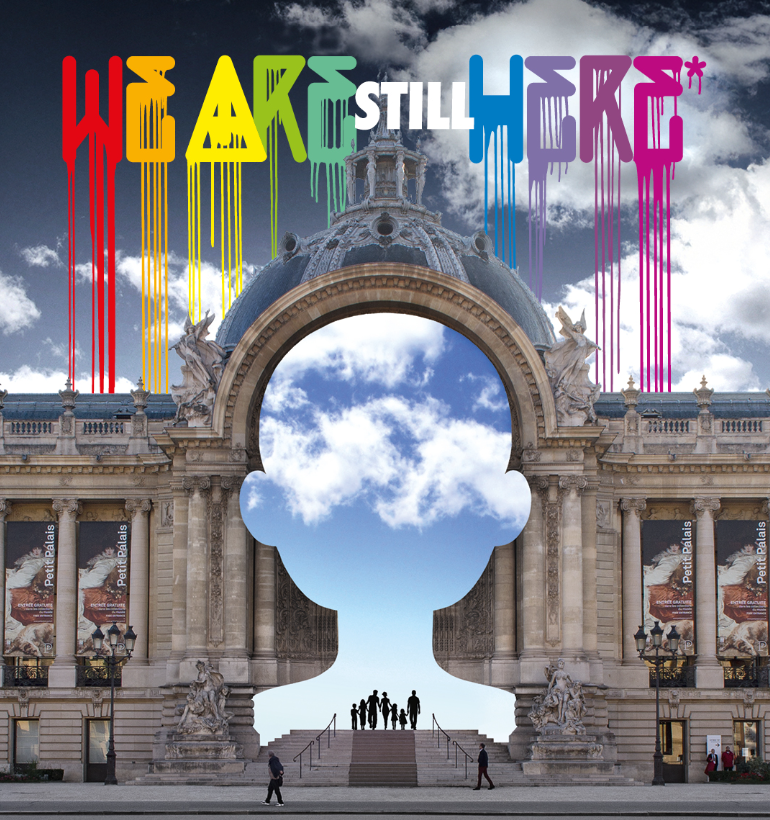
Paris has long been a city where street art and urban culture have found fertile ground. From the painted walls of the Marais to the monumental murals of the 13th arrondissement, the French capital has embraced urban art as a legitimate and vital form of contemporary expression. This summer, that relationship takes a new institutional turn with the return of "We Are (Still) Here" at the Petit Palais, one of the most beautiful Beaux-Arts buildings in the city. Free of charge, open to all, and running from June 20 to September 20, 2026, this exhibition is one of the most significant cultural events of the Parisian summer. Here is everything you need to know before you go.
A Second Edition That Builds on a Successful Formula
"We Are (Still) Here" is not a newcomer to the Parisian art scene. The first edition of the exhibition took place at the Petit Palais in 2024 and was widely praised for its ability to bring urban art into one of the most classical museum settings in Paris. The challenge was considerable: how do you present an art form born in the street, defined by its relationship to public space and its rejection of institutional boundaries, within the walls of a museum built for the 1900 Universal Exhibition?
The answer, as the 2024 edition demonstrated, lies not in domesticating urban art but in creating a genuine dialogue between the art and its architectural setting. The contrast between the ornate columns and gilded ceilings of the Petit Palais and the raw visual energy of street art creates a tension that is itself meaningful. It forces the viewer to reconsider both the art and the space, to question what belongs where and why those boundaries exist in the first place.
The 2026 edition builds on this foundation. It returns to the same fundamental premise, that urban art deserves to be seen in the context of the broader history of art, while expanding the scope of the works and artists presented. The result promises to be an even richer experience than its predecessor.
What Makes the Petit Palais the Perfect Setting
The choice of the Petit Palais as the venue for this exhibition is not accidental. The museum, which houses the City of Paris's permanent collection of fine arts, is known for its eclectic and sometimes surprising programming. In recent years, it has established itself as a space that is genuinely interested in bridging the gap between classical art history and contemporary culture.
The building itself is a work of art. Designed by architect Charles Girault and inaugurated in 1900, it features a magnificent glass-roofed garden at its center, surrounded by arcaded galleries that invite a slow and contemplative form of viewing. This architecture, monumental yet intimate, provides a dramatic backdrop for works that are accustomed to competing with the visual noise of the city.
There is also a democratic dimension to the choice of this venue that aligns perfectly with the spirit of urban art. The Petit Palais is free to enter at all times, not just for this specific exhibition. It is one of the rare major museums in Paris that does not charge an admission fee for its permanent collection or for many of its temporary exhibitions. This commitment to free access resonates deeply with the ethos of street art, an art form that has always insisted on being available to everyone, not just those who can afford a museum ticket.
Urban Art and Its Relationship to Institutional Space
To fully appreciate what "We Are (Still) Here" represents, it is worth taking a step back and considering the broader question of how urban art relates to institutional spaces. This is a question that has generated significant debate within the street art community and among art critics and historians.
For some, the institutionalization of street art represents a form of co-optation, a process by which a fundamentally subversive practice is sanitized, commercialized and ultimately defanged. Under this view, a mural in a museum is no longer street art in any meaningful sense. It has been removed from its context, stripped of its relationship to the specific social and spatial conditions that gave it meaning.
For others, the entry of urban art into museums and institutional spaces represents a long-overdue recognition of its artistic and cultural significance. Artists like Keith Haring, Jean-Michel Basquiat or Shepard Fairey have demonstrated that it is possible to work simultaneously in the street and in the gallery without compromising the integrity of either practice. The museum does not replace the street but adds another dimension to the conversation.
"We Are (Still) Here" takes a position that is closer to the second view. Its very title is a statement of presence and persistence. It suggests that urban art has not been absorbed or neutralized by its encounter with the institution. It is still here, still speaking, still asserting its right to be seen and heard, even within the walls of one of Paris's most prestigious museums.

Key Artists and Works to Look Out For
While the full list of artists and works presented in the 2026 edition has not been exhaustively published at the time of writing, the exhibition promises to feature a diverse range of voices from the international urban art scene, with a particular emphasis on artists who have developed a significant body of work in France and Europe.
Based on the spirit and programming of the first edition, visitors can expect to encounter large-scale works that engage directly with the architectural space of the Petit Palais, as well as smaller, more intimate pieces that invite close and careful looking. The exhibition is likely to include both established names whose work has already achieved significant institutional recognition and younger artists who represent the current state of the urban art scene.
What unites these artists, regardless of their individual styles and approaches, is a commitment to art that speaks to the broadest possible public. Urban art has always been democratic in its ambitions, and "We Are (Still) Here" honors that tradition by presenting work that does not require specialist knowledge or cultural capital to appreciate, while offering enough depth and complexity to reward closer engagement.
Paris as a Capital of Urban Art in 2026
The return of "We Are (Still) Here" at the Petit Palais is part of a broader moment for urban art in Paris this summer. The city is hosting an unusually rich program of urban art events in 2026, reflecting both the continued vitality of the scene and the growing appetite of Parisian institutions for this form of art.
Beyond the Petit Palais, the summer of 2026 sees the continuation of "Beyond The Streets" at the Grande Halle de la Villette, a major international exhibition bringing together more than one hundred artists from across the global street art scene. The two exhibitions complement each other in interesting ways: while "Beyond The Streets" offers a broader, more panoramic view of the history and current state of urban art internationally, "We Are (Still) Here" takes a more focused and site-specific approach, using the particular qualities of the Petit Palais to create a more concentrated and perhaps more emotionally resonant experience.
Together, these two exhibitions make Paris an essential destination for anyone seriously interested in urban art this summer. Combined with the permanent outdoor works that can be found across the city, from the murals of the 13th arrondissement to the mosaics of Invader scattered across the Parisian streets, the French capital offers in 2026 what is arguably the richest urban art experience available anywhere in Europe.
Planning Your Visit: Practical Information
"We Are (Still) Here" runs from June 20 to September 20, 2026, at the Petit Palais, located at Avenue Winston Churchill in the 8th arrondissement of Paris. Entry is free, in keeping with the Petit Palais's general admissions policy.
The museum is open Tuesday to Sunday, from 10am to 6pm, with late opening on Thursdays until 9pm for temporary exhibitions. It is closed on Mondays and on public holidays. The nearest metro stations are Champs-Elysées Clemenceau on lines 1 and 13, and Franklin D. Roosevelt on lines 1 and 9.
Given that this is a free exhibition in a central location during the peak summer tourist season, visitors are advised to plan their visit for weekday mornings or Thursday evenings to avoid the largest crowds. The museum's garden café is a pleasant spot for a break before or after the exhibition, and the permanent collection, which includes important works of French and European art from the Middle Ages to the early twentieth century, is well worth exploring on the same visit.
From the Street to the Collection: Urban Art as a Long-Term Investment
For many visitors, an exhibition like "We Are (Still) Here" is not just a cultural experience but also an introduction to a market. Urban art has become one of the most dynamic segments of the contemporary art market over the past two decades, with artists like Banksy, KAWS, Shepard Fairey and Invader achieving auction results that place them among the most commercially successful artists of their generation.
The institutional recognition that exhibitions like this one confer on urban art as a whole has a direct and positive impact on the market. When major museums present urban art in serious curatorial frameworks, they validate the investment case for collectors who might otherwise have hesitated to commit significant resources to a field that was, until relatively recently, considered marginal by the art establishment.
For those who are considering beginning or expanding a collection of urban art, an exhibition like "We Are (Still) Here" offers an ideal opportunity to deepen their knowledge of the field, to discover new artists and to develop the visual literacy that is essential for making informed collecting decisions. The best collections are built on genuine passion and curiosity, and there is no better way to cultivate those qualities than by spending time with the work itself, in a setting that encourages careful and sustained looking.
Discover Urban Art at Class Art Biarritz
Class Art Biarritz is a gallery specializing in Pop Art and Street Art, located in Biarritz on the French Basque Coast. We represent more than forty international and local artists, including many of the major figures of the urban art scene. Whether you are visiting Paris this summer to see "We Are (Still) Here" and want to continue your exploration of urban art closer to the Atlantic coast, or whether you are simply looking to begin or expand your collection, our team is here to guide you. Visit our online shop or come and see us in the gallery to discover the works currently available.


Comments