

Investing in Street Art in 2026: Trends and Advice

The Evolution of the Urban Art Market: From the Streets to Investment Portfolios
Street art has undergone a phenomenal transformation over the past three decades. What was once considered vandalism is now one of the most dynamic segments of the contemporary art market. In 2026, investing in street art is no longer a risky gamble but a well-considered strategy for diversifying one’s assets.
Why does this enthusiasm persist? Quite simply because street art has a unique characteristic: global organic visibility combined with institutionalized rarity.

Unlike classical art, street art benefits from constant promotion through social media and public space.
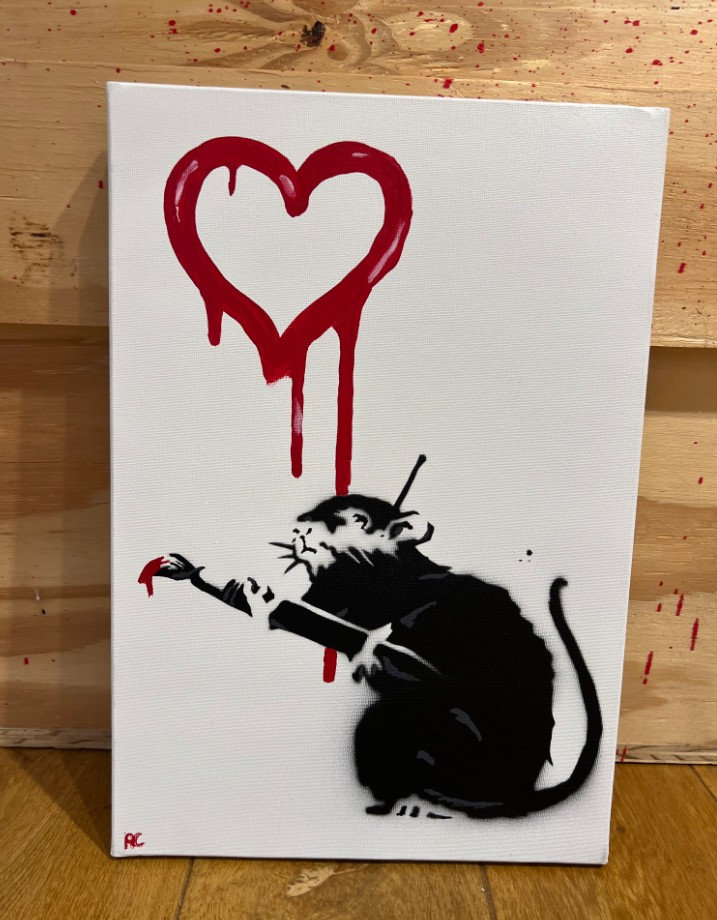
When an artist like Banksy or Invader creates a piece in a city, the media echo is immediate, which directly supports the value of studio works. As an expert, I observe that the correlation between an artist’s physical presence in the streets and their value in auction rooms remains the main driver of price growth.
In 2026, the market is fragmenting: on one side, international safe-haven names; on the other, a new generation of promising urban artists attracting speculative capital.
Analysis of the Urban Contemporary Art Market in 2026
The global art market has experienced adjustments in recent months, but the urban segment is showing impressive resilience. According to the latest reports from Artprice, street art represents a growing share of transaction volume within the contemporary art market.
The year 2026 marks a transition toward greater maturity. Investors are no longer satisfied with simply buying famous names; they now analyze exhibition histories, presence in museum collections, and the strength of representing galleries.
Liquidity is a crucial point. Historically, art was considered an illiquid asset. However, in the case of street art, the rise of online sales platforms and specialized auctions has significantly improved market fluidity. A successful art investment strategy in 2026 depends on understanding fashion cycles.
Today we are seeing a return to more traditional techniques applied to urban aesthetics, such as oil on canvas or bronze sculpture, which reassure traditional collectors.
Artists Whose Market Value Is Rising: Who to Watch This Year
Identifying promising urban artists requires constant monitoring. While established figures such as Shepard Fairey (Obey) or JonOne remain reliable long-term art investment choices, new artists are emerging with strong financial momentum.
Consider the rise of post-graffiti art or urban abstraction. Artists who incorporate elements of luxury culture or pop culture are seeing their prices soar.
It is also worth noting that the French scene plays a prominent role on the global stage. Artists such as Seth, known for his dreamlike universe, or Hopare, recognized for his technical mastery of line work, are showing steady market growth.
My personal view is that the future belongs to artists who succeed in building a bridge between street activism and an aesthetic compatible with the interiors of private collectors. The value of street artists no longer depends solely on peer recognition, but increasingly on the artist’s ability to become a global brand.

Strategies for a successful art investment
How can you turn a personal favorite into a profitable investment? The golden rule is diversification. Do not allocate your entire budget to a single artist, no matter how talented they may be.
In 2026, a balanced portfolio typically consists of:
60% established blue-chip artists
30% mid-career artists whose market value is rising
10% emerging young talents
Provenance and authentication are the pillars of value. In street art, the Certificate of Authenticity (COA) is the most valuable document. Without it, an artwork can lose up to 80% of its resale value.
In addition, prioritize original works (paintings, sculptures) over multiple editions, unless those editions are very limited and signed. A print by Banksy will always be more liquid than a painting by an unknown artist, but the growth potential of a unique work by a rising artist can be far greater.
Art should be viewed as a marathon rather than a sprint. The ideal investment horizon is generally between 5 and 10 years.
The impact of technology and new forms of collecting
It is impossible to discuss art investment in 2026 without mentioning the impact of digital technology. Although the NFT bubble has gone through a necessary correction phase, it has left behind valuable traceability tools.
Today, blockchain technology is beginning to be used to certify the origin of physical artworks. This helps reduce the risk of counterfeiting, an issue that has long affected the street art market.
We are also seeing a hybridization of materials and formats. Urban artists increasingly use repurposed industrial materials such as road signs, pieces of walls, or reclaimed metals.
For investors, this means paying close attention to conservation conditions. Works created on unconventional supports may require specific care to preserve their value. Many collectors overlook this aspect and later see the value of their artwork decline due to avoidable physical deterioration.
Why street art is a serious asset class
Beyond aesthetics, street art meets many of the criteria of a modern financial asset. It is often uncorrelated with stock markets, can provide protection against inflation, and offers a usage value through the pleasure of owning and displaying the work.
In uncertain economic times, tangible assets tend to gain importance. Because of its universal visual language and often social or political message, street art appeals to an increasingly broad base of buyers, from the United States to Asia.
Institutional recognition is the final pillar of value. When museums such as the Museum of Modern Art or the Centre Pompidou integrate urban artists into their permanent collections, they anchor the value of those artists for decades.
This is the signal to watch in 2026. An artist who enters a museum collection is an artist whose financial risk decreases significantly.
Experience shows that collectors who purchased works by artists such as Futura 2000 or KAWS ten years ago are now enjoying returns far greater than those offered by most traditional savings accounts.

Mistakes to avoid when making your first purchases
The most common mistake is buying purely for speculation without understanding the artwork. The art market is sensitive, and pure speculators are often the first to lose when market cycles reverse. Buy what you understand and what genuinely resonates with you, because you may have to live with the artwork for several years before reselling it.
Another mistake is neglecting additional costs: insurance, secure storage, specialized transport, and resale commissions (often between 10% and 25%). These expenses must be included in the calculation of your overall return.
Finally, be cautious of overly short-lived trends. An artist who creates a buzz on Instagram for three months will not necessarily have a thirty-year career. Look for substance behind the hype.
Conclusion and outlook for the end of the year
Street art in 2026 is at a turning point. It is definitively leaving its niche status to become a pillar of the contemporary art market. To succeed in your investment, stay curious, always verify provenance, and surround yourself with professionals who have a long-term vision of the market.
Urban art reflects our current society; investing in it means betting on the culture of tomorrow while protecting your capital today.
FAQ about investing in street art
Is it possible to invest with a small budget?
Yes, absolutely. You can start with limited and signed editions by recognized artists or with original works by emerging young talents. A budget of €1,000 to €3,000 is already enough to acquire pieces with real appreciation potential.
How can you check the market value of a street artist?
The simplest way is to use databases such as Artprice or Artnet, which list public auction results. You can also observe the regularity of gallery exhibitions and the artist’s presence at international fairs such as Art Basel or the FIAC.

What are the main risks of this type of investment?
The main risks are illiquidity (not finding a buyer quickly), the volatility of the market value of very trendy artists, and the risk of forgery. This is why purchasing from established galleries and having a certificate of authenticity are essential.
Will street art go out of fashion?
It is unlikely that street art will disappear, as it has become the visual language of our time. However, like any artistic movement, it evolves. Artists who will stand the test of time are those who can renew their practice while maintaining a strong identity.
One final tip to secure your approach: if you are unsure about the resale potential of a work, or simply want to validate how an artist fits with your current collection, do not hesitate to request a detailed analysis of recent gallery sales to compare primary and secondary market prices. Cross-referencing this data helps avoid emotional overpayments.
To further refine your acquisition strategy, you can seek the guidance of an expert to identify pieces that match your financial and aesthetic objectives. Galerie Class Art in Biarritz assists in this careful selection, helping to discover international street art gems and secure your investments for the future.
To read on our blog:


Comments